There’s a castle in Benicasim that most people who visit its beaches don’t even know exists.
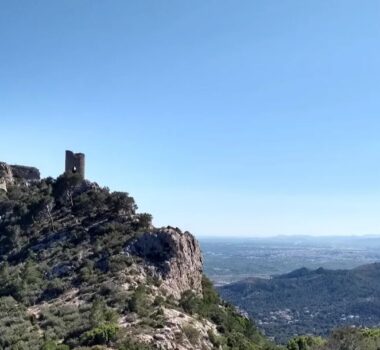
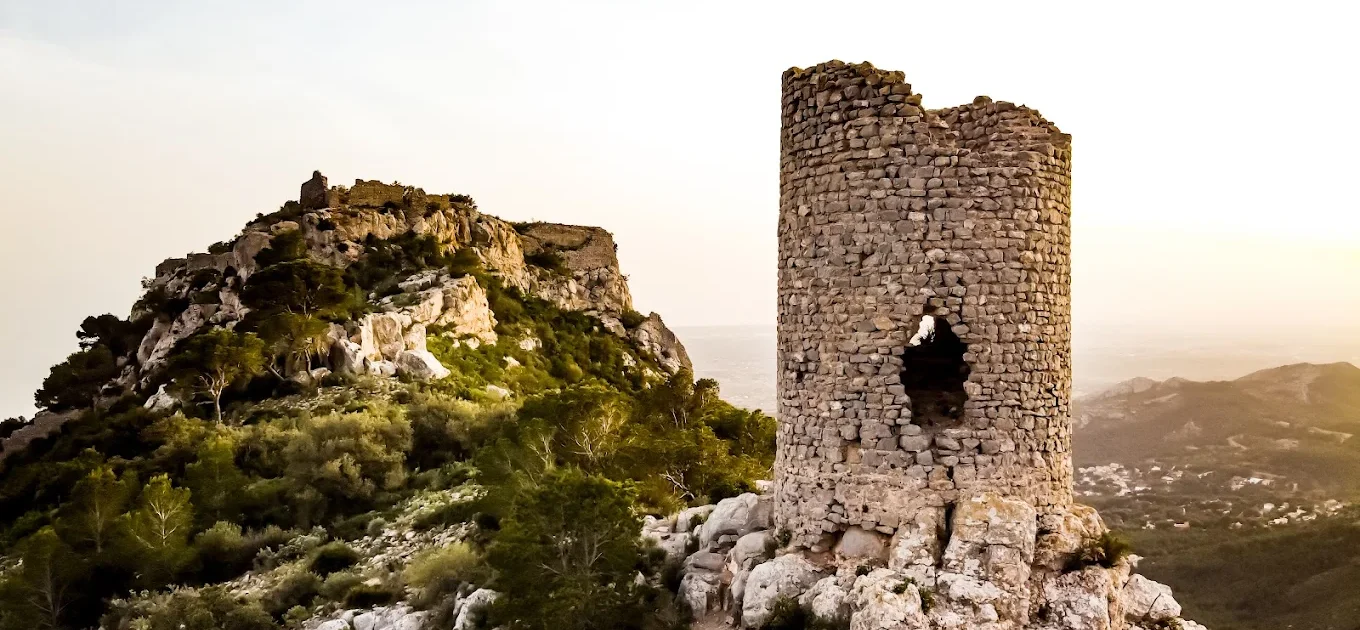
It’s four kilometres from the seafront promenade, at around 450 metres above sea level, on the rugged summit of one of the ridges in the Sierra del Desierto de las Palmas. And the best part isn’t the building itself, as little remains of it; the most impressive thing is the panoramic views from up here.
Has it caught your eye? Here’s more about Montornés Castle.
History and fun facts
Montornés Castle is a Site of Cultural Interest, publicly owned, and one of the most surprising places you can visit on the Costa del Azahar.
Its history begins long before the Arabs; the land it stands on was inhabited since the Bronze Age and, during the Roman occupation, there was already some kind of defensive structure on that summit.
So, although it’s often said that Montornés Castle is of Arab origin and dates back to the 10th century, that’s not entirely true. It was built—almost certainly—on Roman foundations by the Banu Qasim—the sons of Qasim—the Muslim lineage that ruled these lands. In fact, the municipality’s name comes from them: Benicasim.
Given its strategic position overlooking the sea, the purpose of this fortress was to protect the La Plana Alta area; that is, around 17 present-day municipalities.
Later it was conquered by El Cid in 1094 and, afterwards, by James I in 1233. Finally, the fortification was abandoned in the 17th century, when its inhabitants moved down to the plain in times of peace.
What the castle is like inside
In its heyday, Montornés Castle was a large fortress. It adapted to the mountain’s irregular terrain and consisted of three walled enclosures, each designed for a different purpose and to provide different lines of defence in case of attack.
The first enclosure, the outermost, was the initial control area. Hardly anything remains of it beyond traces of towers and the odd wall. The second preserves wall foundations and a cistern. And the third, the most protected core, housed the main quarters: rooms for soldiers, storerooms, a chapel, and the parade ground. It was the last line of defence and where most daily life took place.
This defensive system, which was impregnable at the time, was completed by two watchtowers—and what’s unusual here is that they weren’t the same: one had a square plan and the other was cylindrical. Together they watched over both the interior and the coastal strip. Every flank covered!
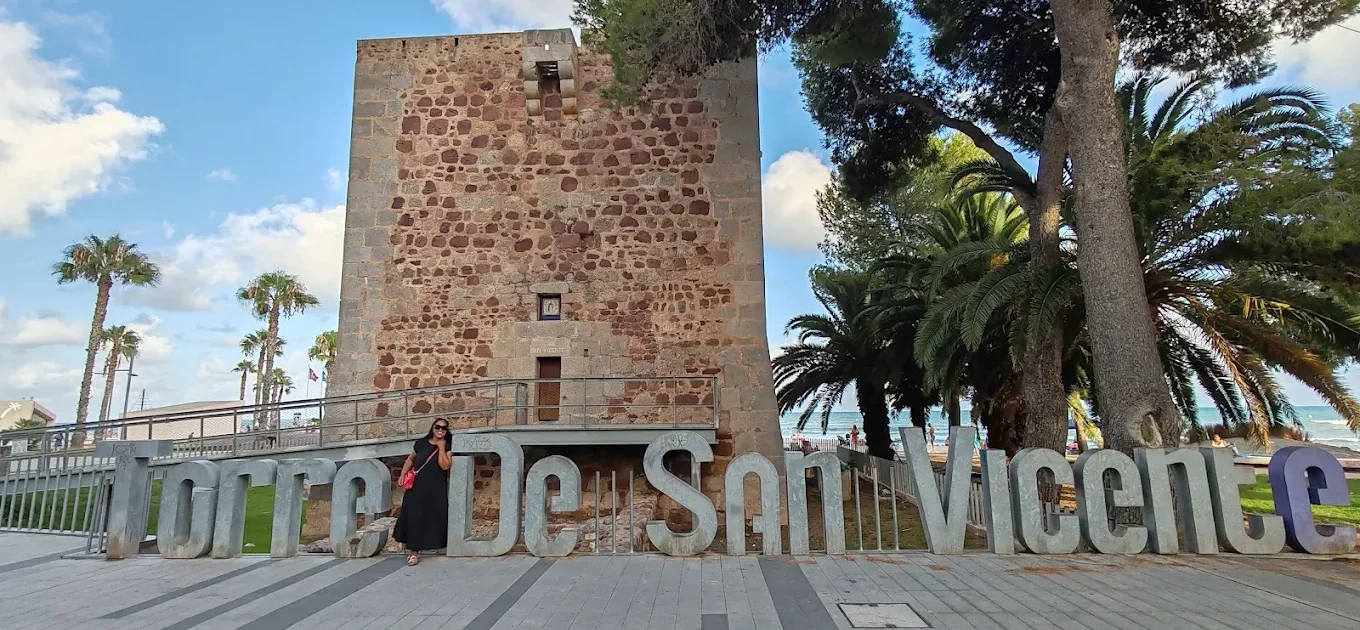
What’s more, the fortress formed a defensive triangle with two auxiliary structures: the Torre de San Vicente, which still stands at the foot of the beach and you can also visit, and the Caseta de Salandó, an advanced guard post. With these three installations… goodbye blind spots!
Today, less remains than we’d like: some stretches of wall, the remains of the two cisterns, part of the entrance system, and the two watchtowers. Structurally it’s not much, but it’s enough to help you understand how large and important it was for the area.
How to get there?
Montornés Castle is 4 kilometres from Benicasim’s town centre, within the Desierto de las Palmas Natural Park, and you can reach it in two ways:
The easiest and quickest is by car, taking the CV-147 —the Desert road— towards the Carmelite Monastery. After a few kilometres you’ll find the turn-off onto a forest track that climbs up to the castle. Then it’s just about a 15-minute walk along a path to reach it.
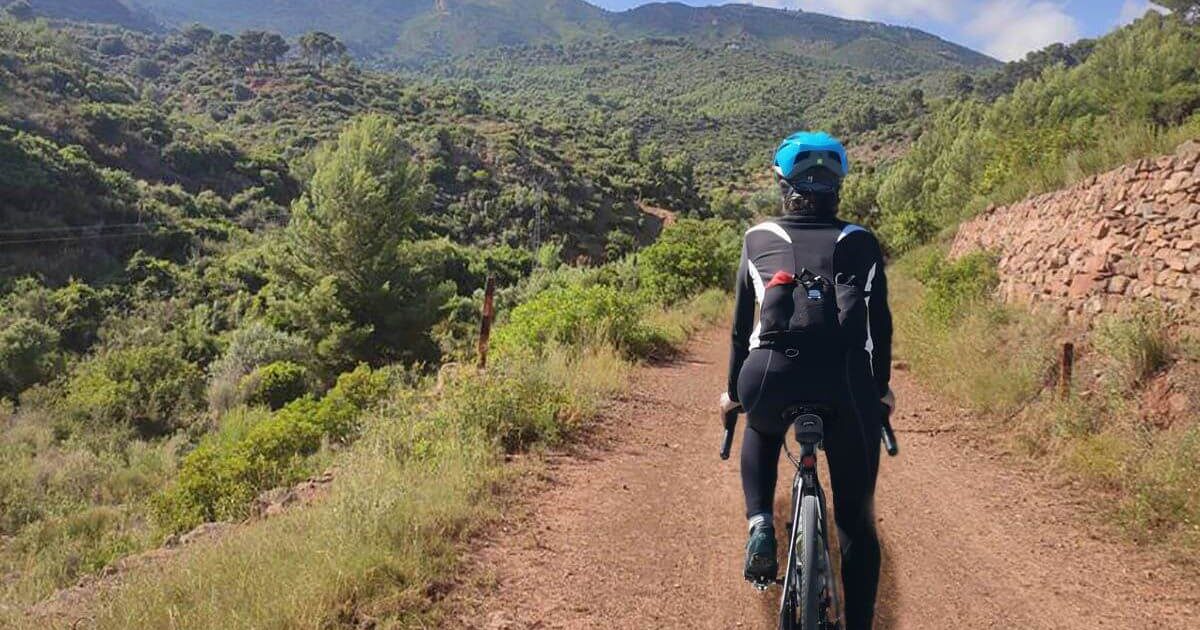
And if you like getting moving, then the challenge is to hike up from Benicasim or cycle up. This route is of moderate difficulty and has quite a bit of elevation gain, but it’s worth it. On foot it’ll take you around two hours, and by bike barely half; plus, along the way you’ll get to enjoy the Natural Park, with varied wildlife—Bonelli’s eagles, peregrine falcons, wild boar, or foxes—and spectacular sea views.
What to see nearby? Benicasim has so much more
Climbing up to the castle is the perfect excuse to spend the day in town, but you should know there’s much more to see in Benicasim that you may not have noticed. It’s a municipality with far more layers than it seems, and here’s what you can’t miss.
The beaches: seven kilometres of sand and Blue Flags
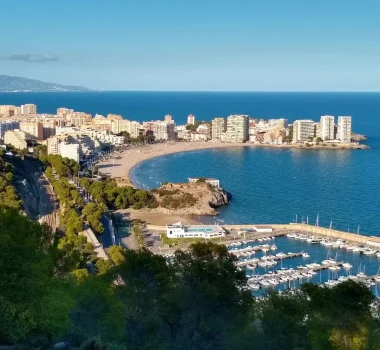
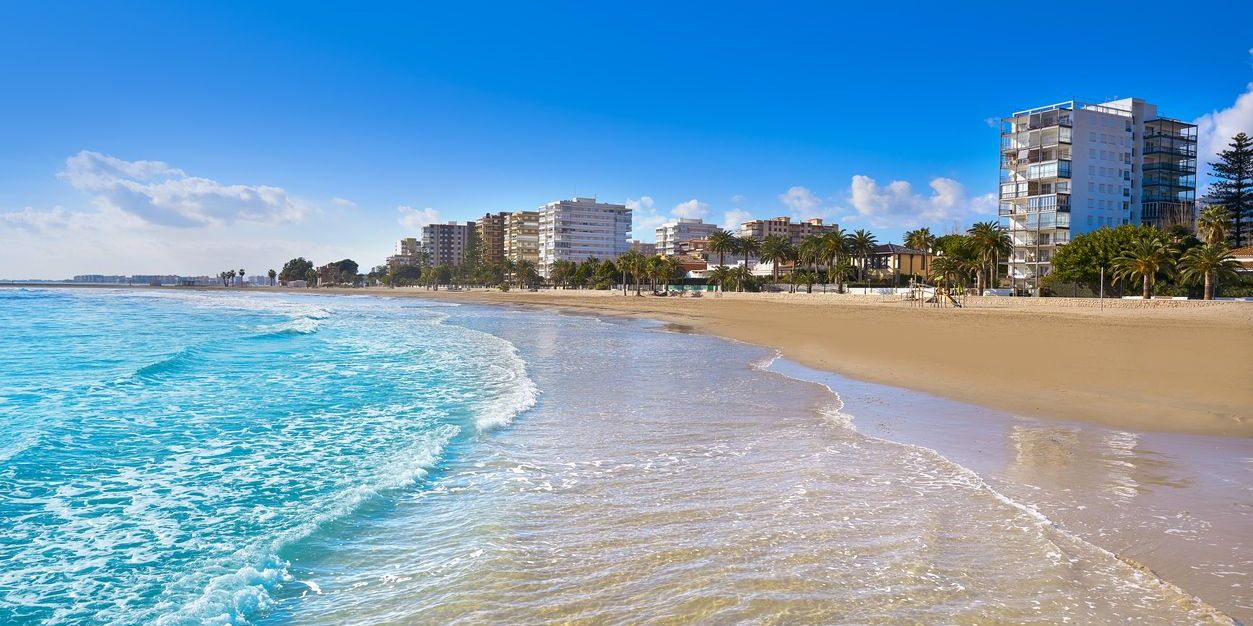
Benicasim has one of the best-equipped coastlines on the Costa del Azahar: seven kilometres of fine sand from north to south, with five distinct beaches and the highest number of Blue Flags in Castellón. If you have to choose, these are the favourites:
- Heliópolis: the longest beach in the municipality, stretching 2.5 kilometres, with a seafront promenade and bike lane that’s worth strolling along even if you’re not going for a swim. It has a Blue Flag, a sailing school, a sea library, a summer cinema, and every service you can imagine.
- Els Terrers: oval-shaped and sheltered by breakwaters, resulting in exceptionally calm waters. It’s ideal if you’re visiting with family or want to try paddleboarding or kayaking. It has a Blue Flag and the Q for Tourism Quality.
- Voramar: further north, in a residential area where the famous early-20th-century villas are located and where the Vía Verde del Mar begins. It has a slightly quieter, more refined feel that sets it apart from the rest.
The Valencian Biarritz
Around the beaches of Voramar and Almadraba lies the neighbourhood known as the “Valencian Biarritz”, a succession of summer villas built between the late 19th and early 20th centuries by the bourgeoisie of Castellón and Valencia.
We’re talking about mansions with towers, gardens, and art nouveau details that, in their day, made Benicasim the place to be. The Villas Route takes about an hour and covers 27 of these buildings along the Pilar Coloma and Bernat Artola promenades.
Desierto de las Palmas Natural Park
Desierto de las Palmas isn’t a desert—despite the name—but a 3,200-hectare haven of pine forest and Mediterranean scrub. The Carmelite monks who settled here in the 17th century called it that because it was so uninhabited, and the name stuck.
The park is home to more than 120 species of birds and mammals such as wild boar, foxes, and red squirrels. If you enjoy wildlife watching and hiking, you have to explore this spot after your visit to Montornés Castle.
Aquarama, go-karts, and the market
On days when the sun is just too strong, you can head to Aquarama, one of the longest-running water parks on the Valencian coast, with slides, wave pools, and a kids’ area. A true summer classic.
And for speed lovers… there are go-karts in Benicasim! It’s a track with circuits for adults and children, ideal to visit after a day at the beach or at Montornés Castle. Plus, every Thursday the weekly market takes over the town’s streets. If you feel like browsing, you’ll find clothes, crafts, local products, and a great atmosphere.
Fancy coming to discover it?
If Montornés Castle could talk, it would tell many more stories and it would be far more interesting to visit—but it would lose all its charm, don’t you think? Climbing up here, in its current state, reconnects you with nature, takes you away from mass tourism, and gives you a different perspective—literally—of the Castellón coastline. That alone makes it worth it.
And because at Orange Costa we want you to enjoy this and many other little-explored corners of Benicasim, we offer all kinds of accommodation in the area at great prices, so you can enjoy the freedom of having your own home here, right in the heart of the Costa del Azahar.