
If this is your first time visiting Peñíscola, the first thing that will surprise you is that its lighthouse is not on a solitary cliff on the outskirts or in a hard-to-reach area. On the contrary, you’ll find it spectacularly integrated into Peñíscola’s old town. And it is precisely its location that makes it so special.
You’ve probably seen a thousand photos of the Peñíscola Lighthouse silhouette against the sea, right? Well, now it’s time to come and see it for yourself and take your own snapshots.
A Bit of History of Peñíscola Lighthouse
To understand this building, you have to travel back in time. This lighthouse was officially inaugurated at the end of the 19th century, specifically in 1899. At that time, navigation along the Mediterranean coast depended entirely on these points of light, and the Peñíscola rock, which juts into the sea, was a strategic but also very dangerous place for ships unfamiliar with its currents and rocks.
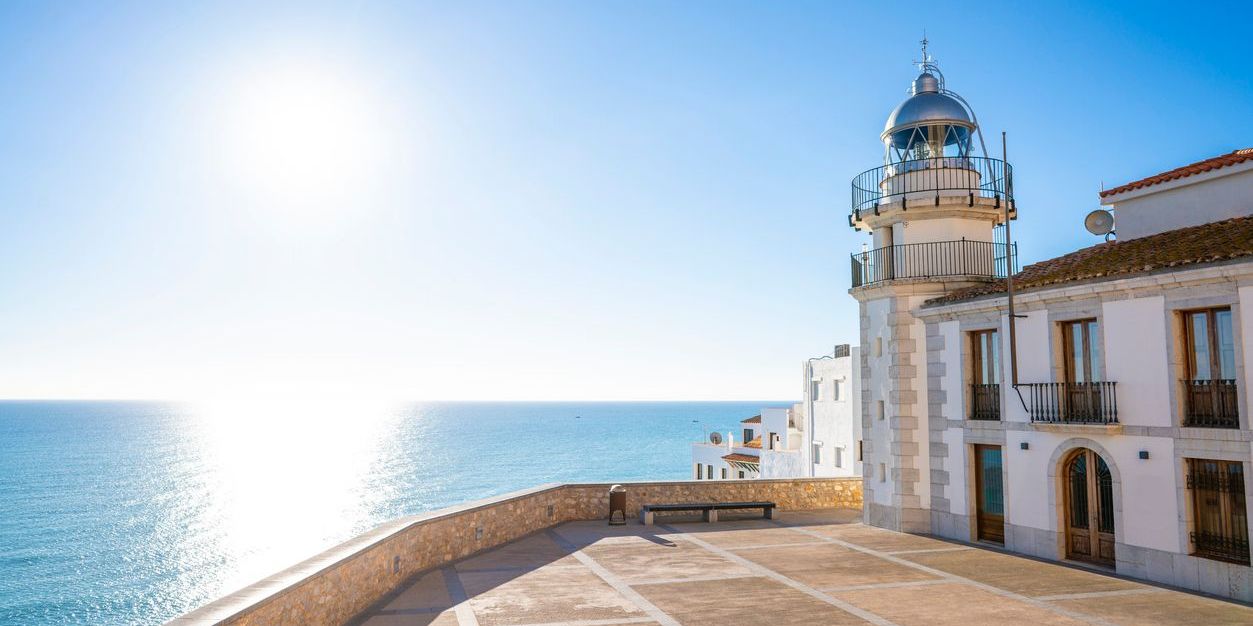
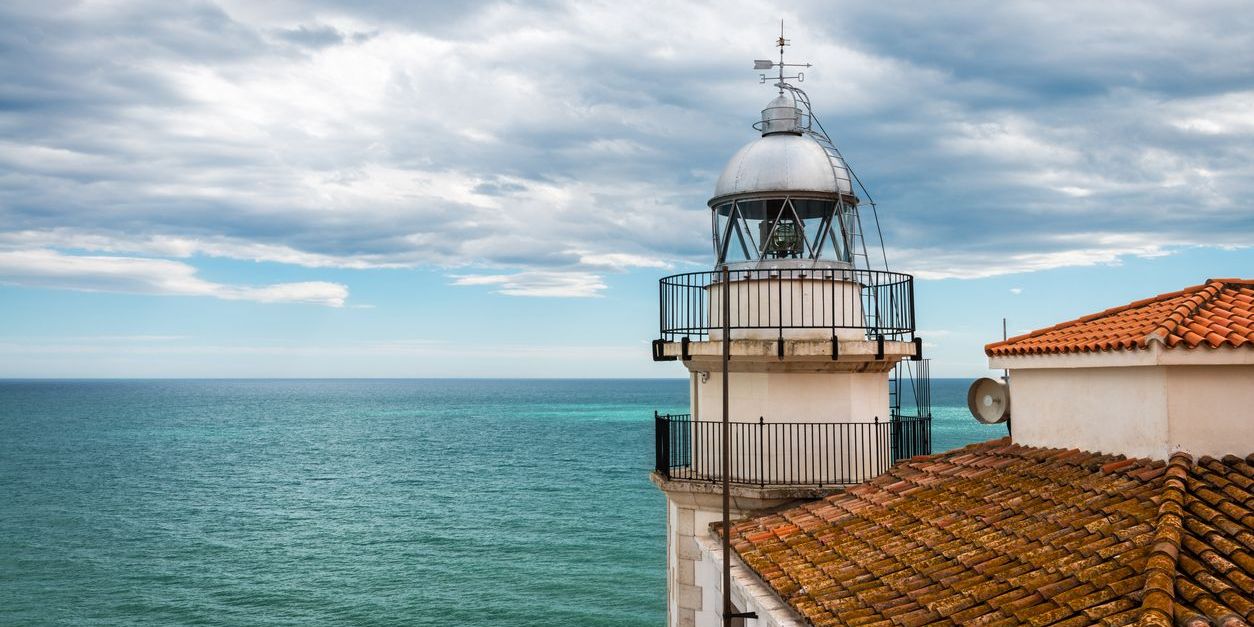
What stands out most about the Peñíscola Lighthouse when you see it up close is its classic and deeply maritime aesthetic. It is a beautiful white octagonal tower that is about eleven meters high and has two floors.
Although it looks like a simple structure from the outside, it has had to be renovated on several occasions. Initially, it operated with oil lamps and manual mechanisms, but today it features a fully automated system that casts its beam of light up to twenty-three nautical miles. Quite impressive!
When you’re here, remember that the old lighthouse keepers and their families used both floors of this building as living quarters and storage, and they witnessed storms, wars, and the growth of maritime traffic and the city.
Where is Peñíscola Lighthouse and How to Get There
The lighthouse crowns the highest part of the rock, so be prepared for a little physical effort that will be totally worth it. You must be very clear that this entire area of the old town is pedestrian, and car access is strictly restricted to residents. You’ll have to go on foot! Therefore, it is highly recommended that you leave your vehicle in one of the car parks near the port or at the entrance to the municipality.
Once you have that sorted, you have two ways to go up, and each, of course, has its own charm.
The Monumental Route
You can go up the main streets that wind upwards following the signs for Peñíscola Castle. This is the most classic route, taking you past various local craft shops and walls.
The Alternative Route
Our favorite is to go up the stairs that ascend from the street starting at the Casa de las Conchas. This building is one of the most curious and photographed in Peñíscola; it is a 1960s house whose facade was covered with thousands of shells in homage to the sea, creating a scene that is now a symbol of Peñíscola’s old town.
It’s a somewhat steeper path but visually incredible. You’ll see the contrast of the white houses with the blue of the sea as you gain height, and before you know it, you’ll appear in Peñíscola Lighthouse square. We assure you the walk will have been worth it!
What to Do at Peñíscola Lighthouse Itself
As an active maritime infrastructure under the management of the port authority, the interior of the tower cannot be visited. However, this does not diminish the interest of the visit one bit.
Recently, the building surrounding the Peñíscola Lighthouse has become the Castle’s Visitor Reception Center, so that’s where you’ll find the ticket offices and can get information for your tour of the Templar fortress. But the truly spectacular part is the square and its views. Here you have a space completely open to the Mediterranean; the perfect place to take home a memory in the form of a photograph.
If you’re a film fan, you’ll be delighted to know that this area has been the filming location for great works in the history of our cinema. Luis García Berlanga, one of the most illustrious Spanish directors, shot scenes here for his films “Calabuch” and “Paris-Timbuktu”. Long live the seventh art! Also, if you watched the series “El chiringuito de Pepe”, you’ll recognize many of the camera angles that used this lighthouse as a backdrop.
More Things to Do Near the Lighthouse
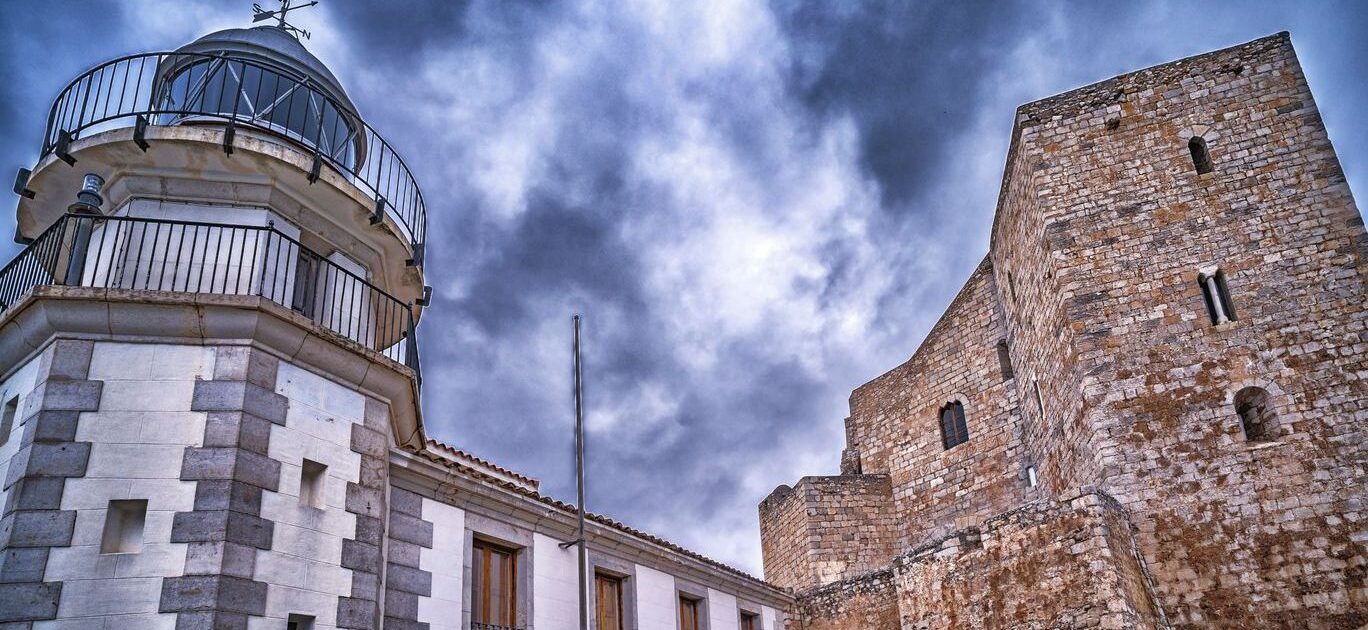
Once you’ve filled your camera’s memory with photos of Peñíscola Lighthouse, don’t go too far because you have a lot to see in the surroundings. Just a few meters away is the Papa Luna Castle, a must-see to understand why Peñíscola was one of the three papal seats in the world.
When you decide to go down, the best way is to head towards the Peñíscola Promenade. It’s a very wide path, full of palm trees and terraces, that connects the old town with the more modern part of the city. From this route, you have direct access to the main beaches of Peñíscola. Sounds like a two-for-one, doesn’t it?
Playa Norte (North Beach) is the most famous because it has several kilometers of fine sand, very clean waters, and, best of all, constant views of the castle and Peñíscola Lighthouse. But if you prefer to escape the more crowded sandy areas, head south, towards the Sierra de Irta Natural Park; here you’ll discover countless hiking trails and also the best coves of Peñíscola. Write down these names: Cala Badum, Cala Volante, Porto Negro, or, a little further away, Cala Argilaga.
Come to Peñíscola to See its Lighthouse
Are you already imagining that feeling of the sun on your face and the smell of salt while gazing at Peñíscola Lighthouse?
That’s exactly what we want at Orange Costa: for you to only worry about experiencing new things and deciding whether you prefer to spend the afternoon at the Castle or go to one of the coves and beaches we’ve recommended. That’s why we have selected the best accommodations so that, after a day exploring the old town, climbing to Peñíscola Lighthouse, and visiting Papa Luna Castle, you can rest as you deserve with all the comforts.
Don’t let them tell you about it; come and discover the Mediterranean from Peñíscola Lighthouse with us.

